
Antique furniture isn’t just functional, it’s often the last tangible thread connecting us to a loved family member or a dear friend that helped shape our lives.
We’ve had clients reach out to our Raleigh refinishing workshop with more than just a sideboard or a desk. They bring with them memories. A cherry dining table, scarred with decades of holiday dinners and laughter. A century-old oak sideboard that a grandmother saved up for over three years during the Great Depression. A walnut writing desk where a recently departed father balanced the family’s finances every Sunday night. One client shared how the only item their third great-grandfather could salvage from a devastating flood was a chest of drawers—still bearing the waterline inside its bottom panel
At Finish Pros, we understand that when you bring us a piece of furniture, you’re trusting us with more than wood and nails. You’re asking us to protect a part of your family’s legacy. Our antique furniture restoration services in the Triangle area are designed with that emotional weight in mind. We help homeowners decide when stripping a finish is necessary, and more importantly, how to do it safely — without sacrificing the patina, the history, or the soul of the piece.
Because when it comes to family stories, there’s no such thing as “just furniture.”
Let’s explore what really happens when you strip antique furniture — and more importantly, what Finish Pros does to restore beauty, preserve history, and protect value.

Completely stripped wood dresser at the Finish Pros shop, prepped for staining and refinishing
A Finish Pros Guide to Preserving History Without Damaging It
Antique furniture carries a kind of soul that’s hard to replicate in modern pieces. Whether it’s a rich cherry armoire passed down for generations or a tiger oak dining table that’s seen decades of gatherings, these pieces hold more than just form — they hold memory, craftsmanship, and history.
So when clients ask us:
“Do you strip antique furniture?”
The answer is: Yes — but only with care, purpose, and the right tools.
At Finish Pros, we believe that stripping isn’t inherently bad — but doing it the wrong way is. Stripping is just one of many tools in our restoration toolkit, and when used skillfully, it can help breathe new life into antique furniture without erasing its story.
In this guide, we’ll walk you through:
- What stripping actually does to antique furniture
- The risks of improper methods
- And how we at Finish Pros do it differently — safely, respectfully, and with preservation in mind.
The Truth About Stripping Antique Furniture
Before we get into the details of stripping antique furniture, let’s start with a critical warning to homeowners and DIY enthusiasts: never sand off the original finish of an antique without understanding the consequences!
Sanding may seem like a logical first step—after all, smooth wood is easier to refinish, right? But here’s the truth: sanding can irreversibly damage antique wood, destroying its patina, unevenly wearing down intricate carvings, and leaving behind a splotchy, inconsistent surface that’s hard to correct. What many don’t realize is that this natural aging, the subtle darkening and oxidation of the wood over time, is part of what gives antiques their value, character, and charm. Once it’s gone—it’s gone for good.
At Finish Pros, we see this mistake all the time from well-meaning homeowners trying to refinish a beloved heirloom. Our professional furniture refinishing services in Raleigh NC are designed to preserve what makes your piece special, not strip it away.


Refinished antique dining table with matching chairs, beautifully restored and placed in a Raleigh, NC home
When done right, stripping is a precise, chemical process to remove layers of old finish—from shellac to lacquer, varnish, wax, or even decades of paint—without harming the wood beneath. This is where expertise truly matters.
Unlike modern furniture, antique pieces are made from natural solid wood, often hand-carved and assembled with traditional joinery. They require care, patience, and a deep understanding of materials. Improper stripping doesn’t just affect appearance—it can warp wood, raise grain, cause water damage, or dissolve delicate glue joints, especially in vintage upholstery and antique furniture restoration projects.
Let’s talk about it!
1. Chemical Strippers Can Penetrate Too Deeply
Antique woods like walnut, mahogany, and maple become more porous over time due to aging and environmental conditions. Aggressive chemical strippers can:
- Soak into open grain
- Weaken glue joints
- Damage veneer adhesives
- Soften wood fibers, creating blotchy textures
At Finish Pros, we use only safe, controlled products and apply them with precision — never as a blunt-force solution. We always follow with neutralizing agents and moisture control techniques to protect the wood.
2. Delicate Veneers and Inlays Need Special Handling
Antiques often feature intricate veneer patterns or inlaid details that are thin and fragile. Uncontrolled stripping can cause:
- Lifting or bubbling
- Delamination
- Cracking and curling
This is why we assess every area before applying a remover, isolate sections, and often hand-strip veneers using non-invasive methods.
3. Stripping Removes Patina — But That’s Not Always Bad
It’s true: stripping may remove the patina of an aged finish, but our method of stripping typically retains the depth and beauty of a wood patina gained over time. For many antique lovers, this is a deal-breaker. But in some cases — such as with painted finishes, darkened oxidation, or smoke-damaged pieces — stripping is the only way to reveal the wood’s original beauty.
Our job at Finish Pros is to help clients decide when preserving patina is best, and when a fresh start honors the piece more.
4. Grain Raising Can Ruin the Finish Without the Right Technique
When moisture-based strippers swell the wood grain, it can lead to:
- Fuzzy, uneven textures
- Over-sanding to fix the issue
- Loss of carved details
Our team minimizes this risk by using low-moisture strippers, tightly controlling humidity, and applying grain-sealing agents before finishing.
5. Post-Stripping Wood May Absorb Stain Unpredictably
Even after safe stripping, antique wood doesn’t always behave like new lumber. It can blotch, absorb unevenly, or turn dull. We mitigate this with custom stain blends, pre-treatment conditioners, and sample testing in hidden areas — all designed to bring out the richest tones possible.
Finish Pros’ Safe and Strategic Stripping Approach
At Finish Pros, we don’t avoid stripping — we master it. It’s part of our deep respect for the craftsmanship of old furniture. When used properly, stripping allows us to:
- Remove damaged or yellowed finishes
- Restore natural grain visibility
- Correct color or sheen imbalances
- Eliminate mold, smoke, or chemical residue
- Prepare the surface for a more protective, beautiful finish

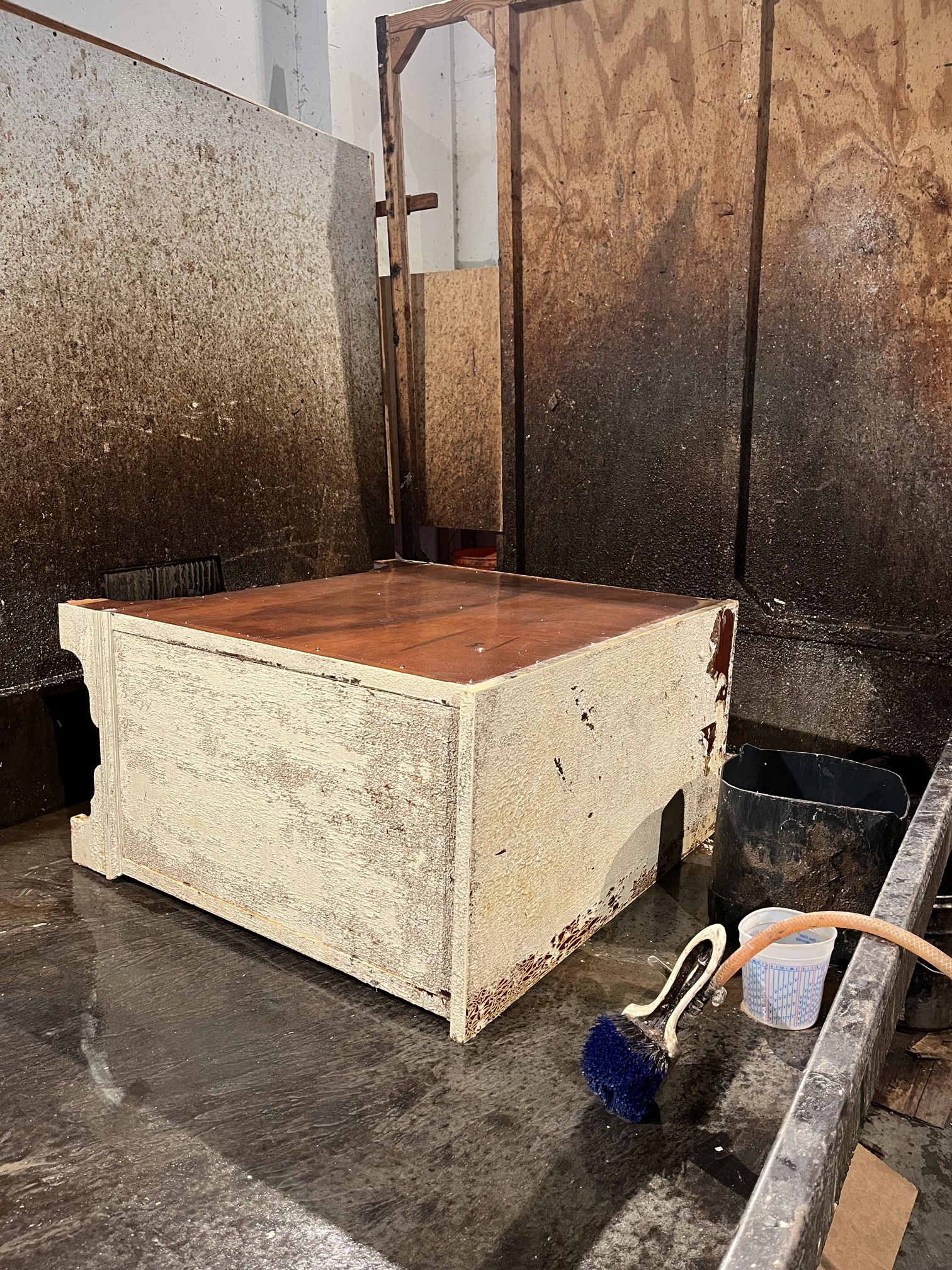
Midway through stripping an antique cabinet — aged paint being removed to expose original wood grain
Here’s how we approach it:
1. Selective, Sectional Stripping — Not Blanket Application
We never “dip” antique furniture. Instead, we:
- Work in small sections
- Use low-odor, low-impact chemicals
- Monitor wood response in real time
- Neutralize and clean the wood immediately after
This ensures we strip only where needed — preserving original materials wherever possible.
2. Detail-Sensitive Sanding After Stripping
Stripping can reveal imperfections or raised grain, but over-sanding can cause damage. We combat this by:
- Using fine-grit sandpaper
- Sanding by hand around carvings and edges
- Minimizing sanding on veneers and softwoods
Our goal is always to maintain original contours, carvings, and details.
3. Custom Color Correction and Stain Matching
Once a piece is stripped and prepped, the real art begins: bringing the color back to life. We create unique stain blends based on:
- Wood species
- Desired finish tone
- Natural age coloration
This is especially important for antique pieces with sun fading, patchy wear, or water rings. Our color correction techniques ensure a smooth, balanced, and era-appropriate finish.
4. Water-Based and Lacquer Finishes for Safe Restoration
Post-stripping, we choose finishing materials that preserve character without overpowering the wood, such as:
- Water-based finishes (low-VOC, non-yellowing, fast-drying)
- Clear or tinted lacquer for a smooth, vintage-authentic look
- Hand-rubbed oils or waxes to retain a natural, heirloom finish
These finishes work exceptionally well for clients seeking antique furniture restoration.
Water-based finishes offer a clean, modern option with no yellowing over time, ideal for clients with sensitivity to fumes or for antique pieces in family living spaces. Lacquer, on the other hand, is best suited for vintage and mid-century pieces due to its rich tone and quick-curing properties — creating a smooth, elegant surface that closely resembles the original factory finish.


Finish Pros technician applying a lacquer finish to a wooden chair in spray booth — one of the final stages of furniture restoration
5. Preservation Is Still Our Priority
Even when stripping is part of the process, our approach focuses on:
- Respecting the wood’s age and condition
- Avoiding over-restoration
- Preserving original joints, hardware, and inlays
- Maintaining as much of the original surface as possible
We believe antique furniture shouldn’t look new — it should look loved, timeless, and well cared for.
Case Study: Dining Table Transformation — From Dark Finish to Natural Maple Elegance
When a Raleigh homeowner reached out to Finish Pros, they were looking to bring new life to a beloved dining room table. The piece had solid bones and sentimental value, but its dark, yellowed finish clashed with the homeowner’s updated space. The goal? A lighter, more natural aesthetic that would highlight the beauty of the wood — without losing the table’s character.


Dining room table with a dark wood finish before refinishing by Finish Pros in Raleigh, NC — original surface appears heavy and opaque
Step 1: Stripping the Dark Finish to Reveal Raw Maple
Our team began by safely stripping the old finish using low-moisture, controlled methods that protected the wood’s integrity. As the layers came off, the original solid maple grain underneath started to emerge — smooth, even, and beautifully understated. This is where professional stripping truly shines: it allows us to remove dated or damaged coatings while preserving the material beneath.
Step 2: Precision Sanding for a Smooth, Even Surface
With the finish removed, we moved to hand-sanding — carefully smoothing the surface to remove any residual finish and prepare the piece for its new look. Because the table had intricate contours along the edge and legs, we took special care to preserve its original shape and detail while exposing the clean, raw maple.
Step 3: A Clear, Protective Finish with a Soft Sheen
Instead of staining the wood, the client opted to keep the table’s natural tone. We applied multiple coats of a clear topcoat with a dull-rubbed sheen, offering a subtle glow that enhances the grain without overpowering it. The result is a refined, organic finish that looks modern yet timeless — perfect for everyday use and special gatherings alike.


Refinished maple dining table with a natural wood finish in a bright Raleigh, NC home — restored by Finish Pros using clear topcoat for a smooth, modern look
When Stripping Is Necessary — and Beneficial
There are scenarios where stripping is essential for a successful restoration. We use it when:
- Paint obscures the wood grain
- Layers of finish have become sticky or opaque
- Odors from smoke or mildew are trapped under the surface
- Structural repairs require access to bare wood
- Water or heat damage has discolored the finish
Even then, our process is deliberate, controlled, and designed to maintain value — not just aesthetics.
Antique Furniture Stripping FAQ: What Our Clients Want to Know
We’ve helped hundreds of clients throughout Raleigh, Durham, Cary, and beyond to refinish treasured pieces, and naturally, a lot of questions come up. Here are answers to the most common ones:
Q1: Is it always bad to strip antique furniture?
A: Not at all. Stripping gets a bad reputation because when done incorrectly, it can damage veneer, erase patina, or weaken the structure. At Finish Pros, we take a measured, conservation-first approach — using low-impact techniques, section-by-section control, and post-strip stabilization. Stripping is sometimes the best way to restore a piece’s beauty — it just has to be done safely.
Q2: What makes stripping antique furniture different from stripping modern pieces?
A: Antique furniture is often made with natural adhesives, hand-cut joinery, and old-growth wood that reacts very differently to moisture and chemicals. Modern pieces usually have synthetic glue and uniform finishes that are easier to remove and replace. Stripping antiques requires historical awareness and attention to wood condition, veneer stability, and finish type.
Q3: Will my furniture lose value if it’s stripped?
A: The real answer to this question of value, specifically monetary value is dependent on a multitudes of factors. The first and biggest question is does the piece hold historical significance. This could relate to the provenance of a piece not just and antique but also could relate to who manufactured or crafted the piece of furniture. We weight these options and discuss these aspects of a project before we ever get started.
Q4: Can you strip painted antique furniture without damaging the wood?
A: Yes, in most cases. We use specially formulated removers that lift paint without excessive moisture or scraping, which helps protect the wood and any veneer underneath. On delicate surfaces, we may hand-strip or test multiple approaches on inconspicuous areas to find the safest method.
Q5: How long does the stripping and refinishing process take?
A: It varies depending on size, condition, and finish complexity. A basic chair may take 1–2 weeks, while a large, heavily painted sideboard could require 3–5 weeks. Our team always provides a timeline estimate upfront and keeps you updated throughout the process.
Q6: Do you offer pickup and delivery services?
A: Yes, we offer local pickup and delivery throughout Raleigh, Durham, Chapel Hill, Cary, Wake Forest, and surrounding areas. For larger items or multi-piece projects, we can coordinate logistics to minimize your effort.
Q7: How do I know if my piece is worth restoring?
A: If it’s solid wood, has sentimental value, or features unique craftsmanship, it’s almost always worth considering. Even severely worn or painted-over pieces can often be restored beautifully. If you’re unsure, schedule a free consultation or request a quote, and we’ll assess its condition and potential.
Ready to Restore Your Antique Furniture?
Whether you’re in Raleigh, Durham, Chapel Hill, or Wake Forest, Finish Pros is your trusted partner for professional furniture refinishing and antique restoration!
Schedule your in-home consultation and let’s bring your heirloom back to life!
(919) 848-3848
info@finishpros.com