

Introduction
Around 2019, the phrase “lacquering furniture” started appearing in conversations with interior designers, becoming synonymous with sleek, high-gloss painted finishes — a far cry from the rustic chalk paints of years past. But for those of us in the refinishing business, lacquer is nothing new. My first request to paint over a rich mahogany or walnut finish came in the early 2000s. Back then, it was so unusual that I had to double-check the client and I were speaking the same language.
Fast forward to today, lacquer-painted finishes are everywhere — in kitchens, living rooms, and even on heirloom antiques. And thanks to modern color-matching technology, lacquer painting isn’t just limited to black and white anymore. We’ve matched everything from Pantone-perfect hues to an avocado-colored piece of pottery.
But what exactly is lacquering furniture? And is it the right choice for your piece? Let’s break it down.
Lacquering: More Than Just Paint
In the furniture finishing world, “lacquering” refers to the chemistry of the finish — not necessarily the color or whether it’s painted. At Finish Pros, we offer a wide array of lacquer-based finishes, including wood-stained and clear-coated lacquer finishes as well as painted lacquer finishes.
A stained and clear-coated lacquer finish is ideal for showcasing the natural beauty of the grain while providing a durable protective layer. Painted lacquer finishes, on the other hand, are perfect for creating bold statement pieces or achieving an exact color match to your space. While the look may vary dramatically between a natural walnut table and a high-gloss emerald green sideboard, the underlying lacquer chemistry — and our meticulous application process — remains the same.
The Basics: What is Lacquer?
Lacquer is a solvent-based finish that chemically bonds to itself between coats. Unlike polyurethane or varnish, where each layer dries independently and can be removed individually, lacquer melds into one continuous layer. This creates an unmatched depth and seamlessness in the finish.
Historically, lacquer has been a favorite for piano finishing — almost always in black or white — because of its clarity and ability to be buffed to a mirror-like sheen.
But in modern furniture refinishing in Raleigh NC, Cary NC, and throughout the Triangle, lacquer now comes in a full spectrum of colors and sheens, from dead flat to ultra high-gloss.
- High-gloss lacquer can be buffed to a mirror-like surface, making it a favorite for high-end, statement pieces.
- Matte lacquer offers a more understated, modern look but can show shiny spots where it’s been scuffed.
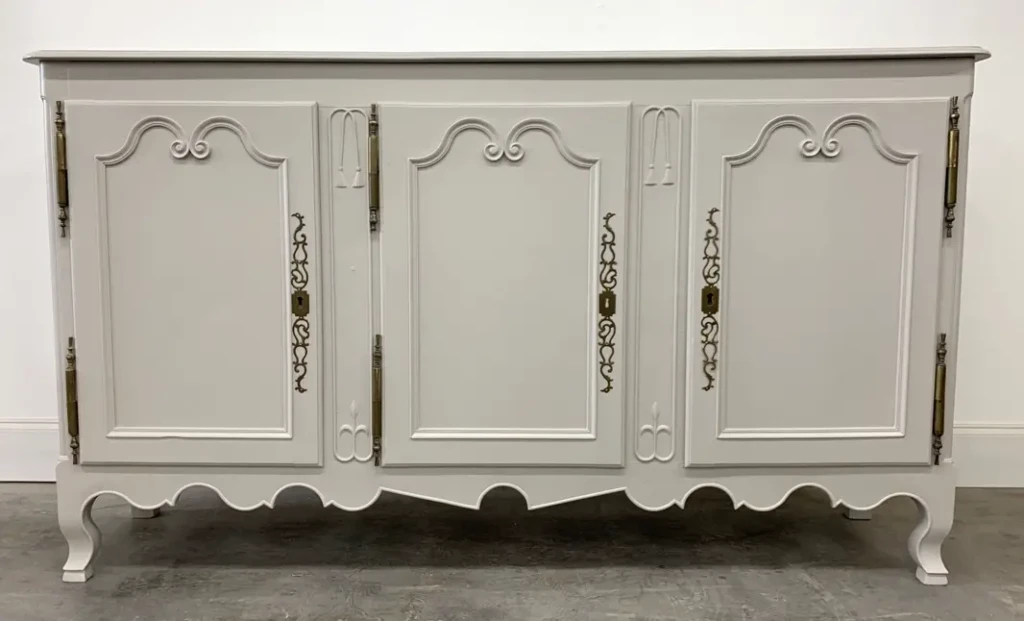
- Satin lacquer strikes the perfect balance, offering elegance while being forgiving to everyday wear.
The Beauty vs. the Practicality
As stunning as glossy lacquer finishes can be, they’re not without drawbacks. Because of their reflective surface, scratches — even those caused by dust — are more visible than on other finishes. Placing and sliding an Amazon box across a lacquered entry table is all it takes to leave a mark. Matte lacquers, while less reflective, have the opposite problem: scuffs can appear shinier than the surrounding surface, making them just as noticeable.
From years of visiting thousands of homes and businesses, I can tell you that satin lacquer is often the most practical choice. It’s less trendy, more timeless, and offers just enough sheen to look refined while minimizing visible wear.

Traditional Lacquer vs. Water-Based Lacquer Finishes
Choosing between traditional nitrocellulose lacquer and modern water-based lacquer depends on the furniture’s construction, intended use, and environmental conditions.
Traditional lacquer excels on stable, well-built hardwood pieces that won’t experience much movement at their joints. If your goal is a show-stopping, high-gloss finish — the kind that looks like you could dive into its reflection — traditional lacquer is unmatched. It also has the advantage of reversibility, meaning it can be stripped and refinished back to wood stain years down the road.
Water-based lacquer, however, is often the smarter choice for antique or solid wood pieces prone to expansion and contraction. Its flexibility allows it to move with the wood, reducing the risk of cracking or splitting. It’s also ideal for high-traffic surfaces like kitchen islands or softwood dining tables, where impacts are inevitable. As a bonus, water-based finishes have reduced VOCs, making them more environmentally friendly and easier to work with in occupied spaces.

An Endless Palette: The Color Possibilities of Lacquer Painting
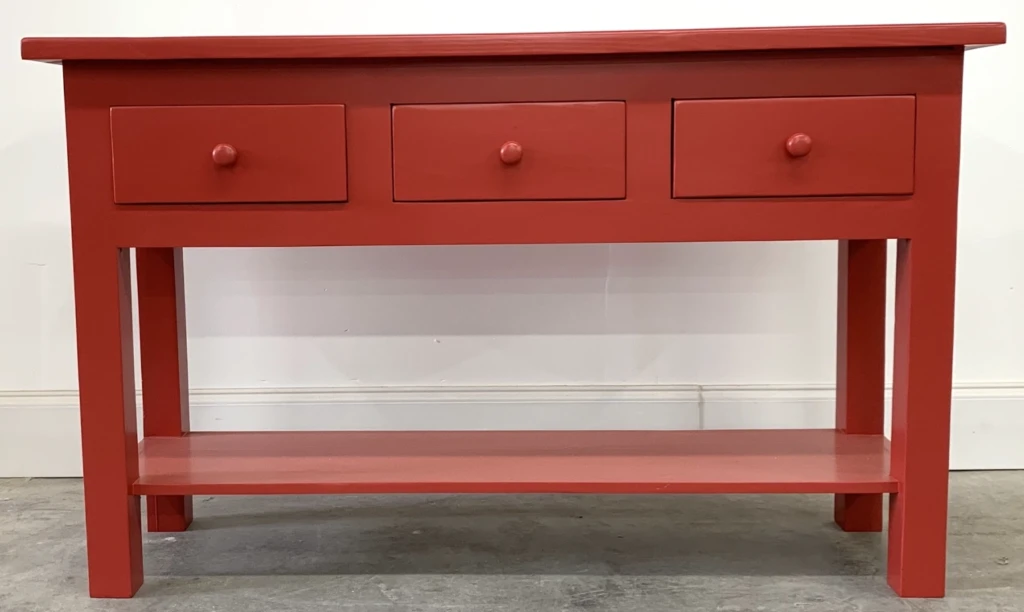
One of the biggest draws of lacquer painting is the virtually limitless color selection. We can match any major paint manufacturer’s palette — from Benjamin Moore and Sherwin-Williams classics to custom shades inspired by art, textiles, or even ceramics.
Our design team helps clients narrow down choices by:
- Identifying the desired aesthetic — Whether you want timeless sophistication, modern boldness, or a playful pop of color.
- Evaluating your space — Considering wall colors, flooring, and surrounding furniture for a harmonious look.
- Guiding you through trends and classics —
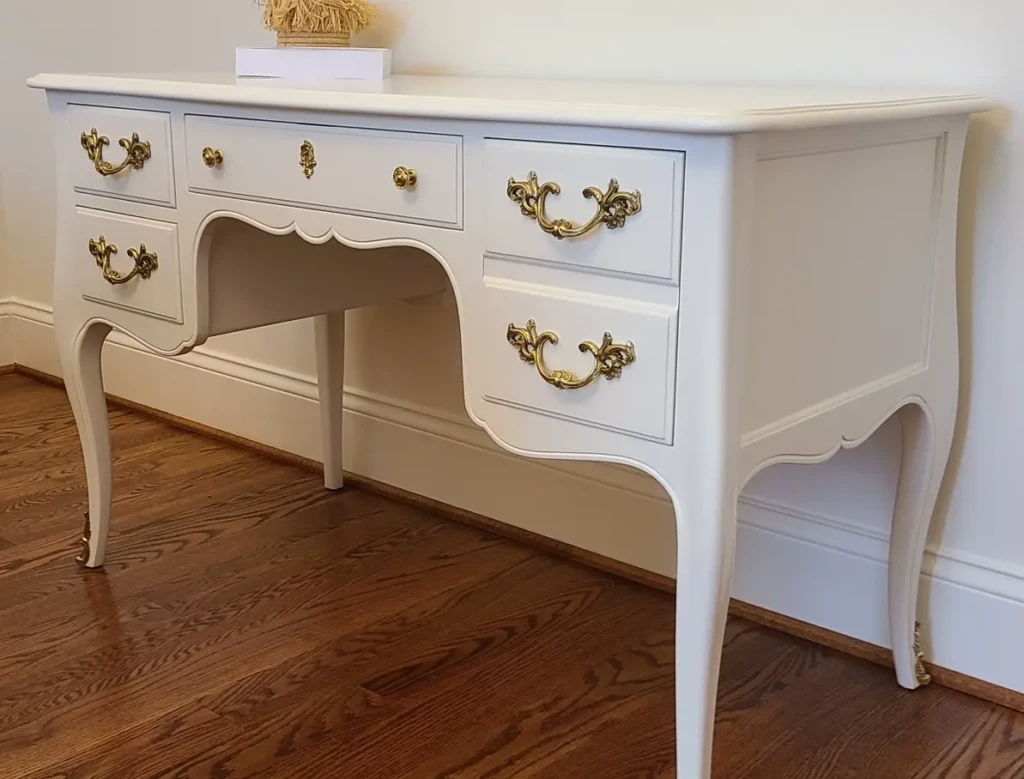
- Traditional looks like black lacquer buffed to a piano finish, creamy whites for French Provincial styles, and deep navy for formal interiors remain timeless.
- On-trend tones such as muted terracotta, soft sage green, and moody charcoal are gaining ground in upscale interiors.
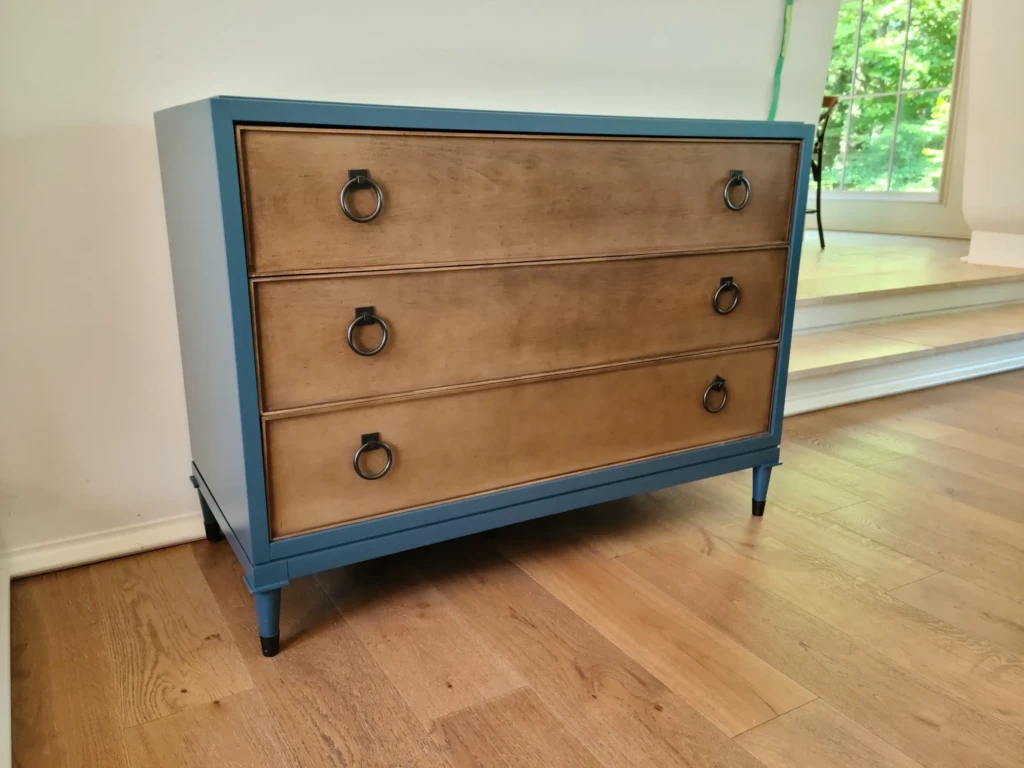
- Mixed-material designs, like a wood-stained tabletop with a painted lacquer base, offer warmth and color contrast for a custom, layered look.
Case Study: Kathleen’s Two-Tone Oak Table Transformation
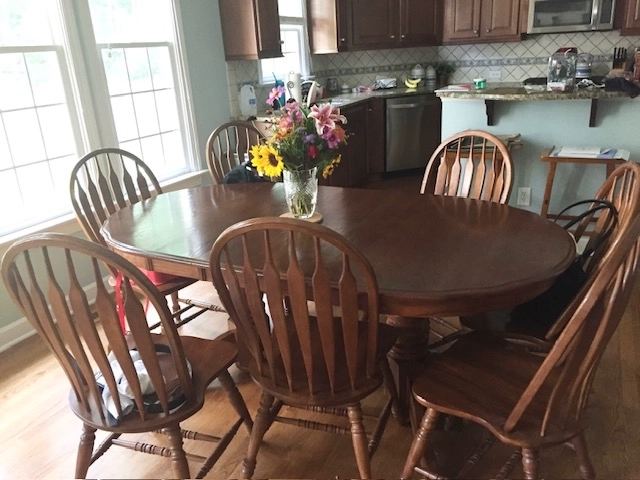
Not all refinishing projects start with a quest for a trendy look — sometimes, it’s about preserving something irreplaceable. Kathleen, a longtime friend and client from the Wakefield area, was in the middle of moving to her new home off Glenwood Avenue. Her solid oak kitchen table had been with her since she was first married, and countless family memories were made around it.
When she began looking for a replacement, she quickly realized two things: quality solid oak tables were now shockingly expensive, and most new options didn’t come close to the craftsmanship of the table she already owned. The only problem? Its dark brown finish didn’t suit the bright, airy aesthetic of her new kitchen and surrounding rooms.
Kathleen reached out to us to explore her options. Together, we decided on a two-tone finish that would keep the warmth and durability of her oak tabletop while refreshing the base and skirt with a painted lacquer in a crisp, clean tone. Our team picked up the table from her old home before the move, refinished it over the course of a few weeks, and delivered it directly to her new home.
The chairs were an unexpected twist — Kathleen found a sturdy set on Facebook Marketplace that fit the new look perfectly. We refinished them to match the updated table, giving her an entirely refreshed dining set for a fraction of the cost of buying new.
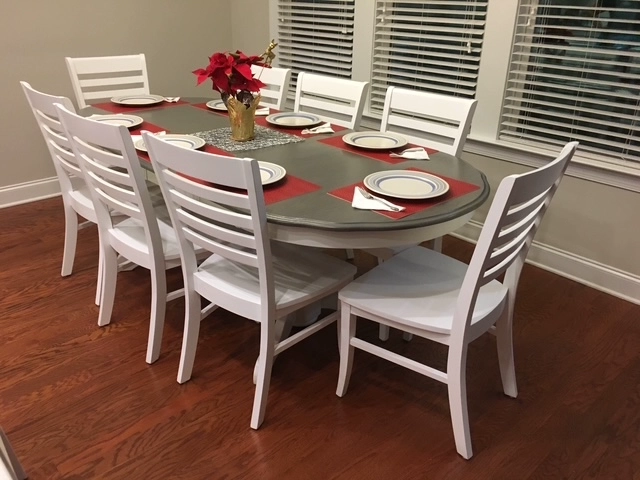
The end result? A solid oak table with a painted lacquer pedestal base and skirt, paired with sleek, updated chairs — a perfect blend of sentimental value, durability, and contemporary style.
Durability, Repair, and Maintenance
Lacquer is a hard and durable finish, but it’s only as stable as the surface beneath it. In humid environments, such as bathrooms or coastal homes, wood can expand and contract, causing cracks in a rigid lacquer finish. Once cracks appear, moisture can seep in, leading to further movement. For these conditions, we often recommend a more flexible finish.
When it comes to repairs, small chips or scratches can be touched up, but for large surfaces like table tops, achieving a perfect color and sheen match often requires recoating the entire piece.
Even non-yellowing lacquer can develop a slight amber tone after many years, especially in lighter colors. Water-based finishes tend to resist yellowing better and have improved UV stability.
As for maintenance, lacquer finishes require almost no upkeep. You should never use polishes like Pledge, Endust, or cream-based cleaners, as they add an artificial sheen that quickly fades. A soft, dry cloth for dusting is all that’s needed to keep your furniture looking beautiful.
The Big Advantage: Reversibility
A little-known but important fact about solvent-based lacquer is that it’s reversible. If you decide in two, ten, or twenty years that you’d like to restore your lacquer-painted piece to its original stained finish, it can be stripped without damaging the underlying wood. That means you can embrace bold color choices today without locking yourself into them forever.
Conclusion
Lacquering furniture is not just a design trend — it’s a time-tested finishing method that offers unmatched beauty, depth, and versatility. Whether you’re looking to revive an outdated piece, create a bold centerpiece for your home, or blend painted and stained elements for a custom look, Finish Pros offers the expertise to guide you from concept to completion.
We handle furniture refinishing in Raleigh NC, lacquer painting in Cary NC, and furniture restoration throughout the Triangle, helping clients choose the right finish for both their aesthetic vision and practical needs.
📞 Ready to transform your furniture? Contact Finish Pros today and discover why we’re the go-to choice for “furniture refinishing near me” in Raleigh, Durham, Cary, Chapel Hill, and beyond.