
Dan McKenzie has spent more than 25 years refinishing and reupholstering furniture for families across the Triangle. In that time, the Finish Pros shop has taken in pieces with just about every kind of damage you can picture: a dresser a cat treated as a scratching post, an heirloom that a well-meaning relative “fixed” with the wrong glue, a 19th-century sofa that needed far more work under the fabric than the owner ever expected.
Here is what all of that experience has taught us. Most furniture damage does not come from age. It comes from improper repairs, missed maintenance, and good-intentioned mistakes that quietly get worse over time. The encouraging part is that most of these problems are preventable, and the ones that aren’t are usually fixable if you catch them early.
Below are the five issues we see most often in Raleigh homes, why they happen, and how to keep them from costing you a piece you love.
Key takeaway: Most furniture damage in Raleigh homes comes from preventable mistakes rather than age: recovering over old fabric, DIY refinishing with the wrong products, furniture polish that interferes with staining, untreated pet damage, and moisture from humidity or leaks. Catching any of these early almost always costs less than waiting, and a quick professional evaluation can tell you whether a piece is worth restoring.
Quick Answer
The five most common furniture mistakes we see at Finish Pros in Raleigh are: layering new upholstery over old fabric instead of stripping the piece down, DIY refinishing with the wrong products or technique, using furniture polish such as Pledge on wood that may later be refinished, underestimating hidden pet damage, and letting water or humidity sit on wood. Most are preventable with the right materials and a little guidance up front. When damage has already started, fixing it early almost always costs less than waiting. Finish Pros offers a complimentary consultation to evaluate your piece and tell you whether repair, refinishing, or reupholstery makes the most sense.
| The mistake | The problem | The fix |
|---|---|---|
| Layering new upholstery over old | Bulky shape, trapped odors, short-lived results | Strip the piece to the frame first |
| DIY refinishing | Wrong products can ruin the wood | Test first; call a pro for complex pieces |
| Using furniture polish | Residue can block stain and trigger reactions | Dust with a dry microfiber cloth only |
| Ignoring pet damage | Hidden odors and structural damage | Tell your upholsterer about it upfront |
| Water and humidity | Mold, discoloration, veneer separation | Control the environment and act early |
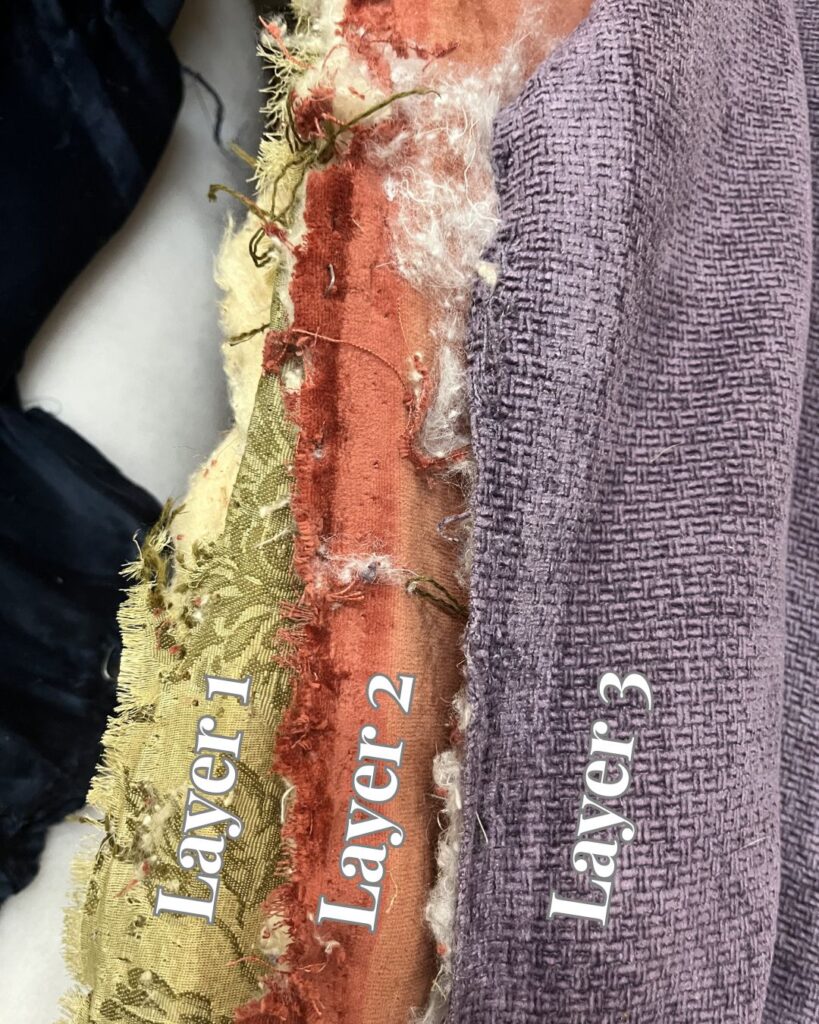
Mistake #1: Layering New Upholstery Over Old Fabric
Choosing between a DIY upholstery project and hiring a local shop is hard enough. Harder still is paying for upholstery work and ending up with chairs that look bulky, feel uncomfortable, and still carry an odor.
We see this more than you would think. Clients bring in pieces that another upholsterer recovered only a few years earlier, and once we open them up, we find layer upon layer of old fabric hidden underneath. That buildup traps worn padding, dust, and stains that can be decades old, and it changes the shape and feel of the piece.
That is why we hand-strip every upholstered item down to the frame before we recover it. Stripping the piece lets us read the internal structure: the springs, the foam, the frame, the joints. It tells us whether a cushion needs rebuilding or whether there is a repair to make before a single yard of new fabric goes on. Working from one clean layer also means the new fabric lays correctly when it is sewn and holds up long after the job leaves our shop. That full teardown is the core of custom upholstery done right, and you can see how it plays out on a tricky piece in our breakdown of rebuilding a curved sofa from the frame up.
Pro tip: Before you hire anyone, ask whether they strip the piece completely before recovering it. A shop that strips to the frame is showing you the quality is built underneath, not just on the surface.
Mistake #2: When a DIY Refinishing Project Goes Sideways
Facebook and Pinterest make furniture refinishing look easy, and sometimes it is. Other times a small misstep leads to damage that is expensive or impossible to undo.
We regularly see pieces that were sanded too deeply, stripped without the right prep afterward, or treated with a product that was never tested on the wood first. A common assumption is that refinishing is just sanding and applying a new coat. In practice, every piece is different. Wood species react differently to stains, paints, strippers, and topcoats, and a process that works beautifully on one project can ruin another. We have watched a simple refresh turn into a full restoration because aggressive sanding cut straight through a thin veneer.
Product compatibility is the other trap. Not every paint, stain, sealer, and topcoat plays well together. The wrong combination can peel, bubble, discolor, or never fully cure, and humidity and temperature can push the result in the wrong direction too.
The real skill is knowing which projects are safe to take on yourself and which ones are worth handing off. Our craftsmen evaluate the piece, spot problems before they spread, and match the right products to the wood. That judgment is the heart of professional furniture refinishing: plenty of pieces are fine for a confident DIYer, and some are too valuable, or too far gone, to gamble with.
Pro tip: Always test your stain or stripper on a hidden spot first. Different wood species react in their own way to the same product, and the underside of a tabletop is a safer place to learn that than the top.
Mistake #3: Furniture Polish Is Harder on Wood Than People Realize
Maybe your side table looks dusty, or you are wiping toddler fingerprints off a desk, and you reach for a familiar furniture polish like Pledge. We have come to think of that bottle as one of the bigger hidden problems we deal with.
The label says it is safe for furniture, and for day-to-day surface use that may be fine. The trouble shows up later. When a polished piece comes into the shop to be stripped and refinished, the polish has often soaked past the old finish and into the wood itself. From there it can fight the new stain, sealer, or lacquer, leaving blotchy color or a finish that resists curing the way it should.
We have crossed this bridge many times, so we know how to work through it, but it takes extra steps and sometimes several attempts before the stain reads evenly. It is one of the more avoidable problems we run into.
Pro tip: When wood furniture needs cleaning, use a dry microfiber cloth and wipe gently with the grain. That keeps polish residue out of the wood and avoids the microscratches that build up in a finish over time.


Mistake #4: How Pet Damage Becomes a Permanent Problem
Sometimes we do not learn the full extent of pet damage until a piece is already in the shop and we are mid-repair. A torn corner on a couch can turn into new foam and structural work once we see how many years of scratching went into the frame underneath.
Odor is the bigger surprise. You can go “nose-blind” to it in your own home, and then the chair arrives at our shop and the smell tells the rest of the story. Urine is the worst offender because it is easy to overlook. It seeps deep into foam and can keep a sofa smelling long after it has been reupholstered. It can also soak into the wood frame, and the repeated wetting can lead to structural damage that lingers under brand-new fabric.
This is why we ask clients to tell us about pet history when we take on a project. If we know up front, we can plan for foam replacement and treatment instead of discovering it halfway through, which is where unexpected labor and cost tend to come from.
Pro tip: If you are reupholstering after pet damage, choose the right upholstery fabric: something tightly woven with a higher abrasion (rub count) rating. Smoother, tighter materials are harder for cats to snag and less likely to get pulled by dogs.
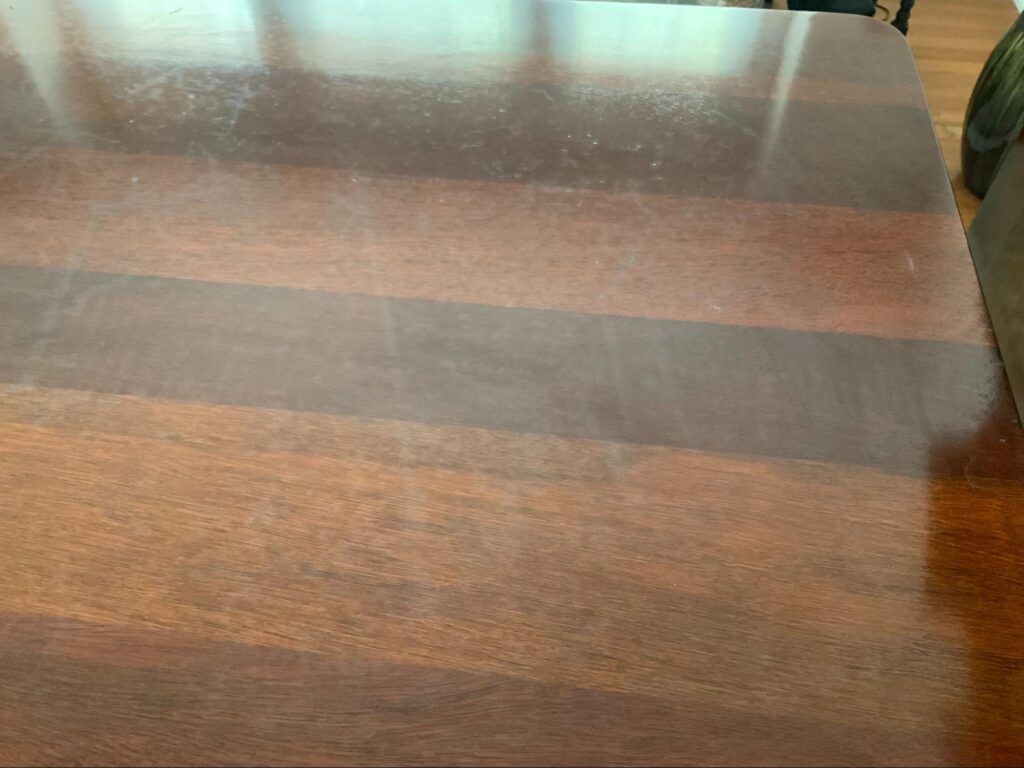

Mistake #5: Water and Humidity Damage
Water damage is a serious challenge even for professionals. Sometimes it is nobody’s fault: a hot water heater fails and leaks through the ceiling onto a dining table. Water can cause mold, ruin a lacquer finish, and leave discoloration in the wood that is difficult to reverse.
Humidity is the slower version of the same problem, and it matters a lot here. Most North Carolina homes do not have climate-controlled garages, so a sideboard stored out there through a Carolina summer can develop veneer separation and warping from the moisture alone. One small thing leads to another, and a piece you were trying to protect ends up needing real work.
Where you can, keep furniture out of high-moisture spaces. That might mean using a climate-controlled storage facility for pieces you cannot fit in the house, and keeping up with routine plumbing maintenance. When water damage does happen, the sooner it is addressed, the more of the piece we can usually save through furniture restoration, which includes veneer repair and water-damage work.
Pro tip: Act on water damage early. The longer moisture sits, the more damage it does. If you notice the finish starting to discolor or cloud, reach out to a professional before it spreads.
A Few More We See Around the Triangle
Heat and sunlight. Direct sun fades fabric, bleaches wood finishes, dries out leather, and can crack or separate veneer. Some of the worst fading we see comes from pieces parked next to large windows with no UV protection on the glass.
Indoor furniture used outdoors. Indoor fabrics, foam, thread, and finishes are not built for the elements, and they break down fast outside. Outdoor projects call for outdoor-rated fabric, dry-fast foam, UV-resistant thread, and weather-resistant finishes. Recovering a patio chair in indoor materials is a short-term fix that rarely lasts a season.
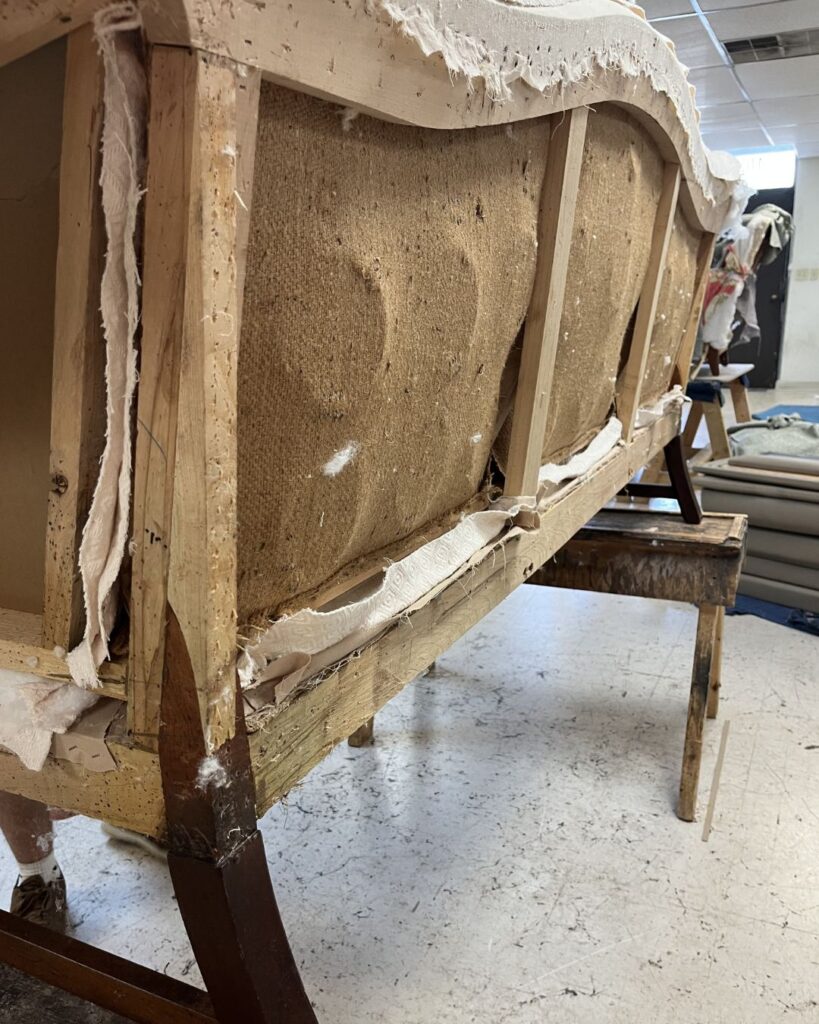
Why We Strip Every Piece to the Frame
Most furniture problems share one root cause: the real issue is internal, and you cannot see it from the outside. A couch that sinks, a chair that wobbles, springs that poke you when you sit down. None of that gets solved by new fabric on top.
Here is a typical example. A client brings in a wobbly Martha Washington chair and is not sure whether it is the leg or the seat. We strip it down and find the culprit is a small wooden dowel in the joint that has cracked in half. No amount of reupholstery fixes a broken joint underneath. Opening the piece up and repairing it at the source is what actually solves the problem, and doing it early is almost always cheaper than waiting for the failure to spread.
That is the case for early intervention. Fixing the root cause while you are at it lets you change the fabric and refresh the style at the same time, so you get a piece that looks new and holds together for years.
Frequently Asked Questions
Can I reupholster over my existing fabric to save money? It is not a shortcut we recommend. Recovering over old fabric traps the worn padding, dust, and odors that are already in the piece, and it adds bulk that changes how the furniture looks and feels. It also hides whatever is happening with the springs, foam, and frame underneath. Stripping a piece to the frame costs a little more up front, but it lets the upholsterer catch and fix internal problems and ensures the new fabric lays correctly and lasts. In most cases, doing it right once is less expensive than recovering a piece twice.
Why is furniture polish like Pledge a problem before refinishing? Many furniture polishes leave a residue that, over time, works past the existing finish and into the wood. When that piece later goes through refinishing, the residue can resist or react with new stains, sealers, and lacquers, causing blotchy color or a finish that will not cure evenly. We can usually work through it, but it takes extra steps and sometimes several attempts to get an even result. For routine cleaning, a dry microfiber cloth wiped with the grain is a safer choice that keeps your refinishing options open.
Will my pet’s odor come back after I reupholster? It can, if the source was never addressed. Urine in particular soaks deep into foam and even into the wood frame, and new fabric alone does not remove it. That is why we ask about pet history before starting a project. When we know up front, we can replace affected foam and treat the piece so the odor does not return. Telling your upholsterer about pet issues early also prevents the surprise labor and cost that come from discovering the problem mid-project.
Is DIY furniture refinishing ever worth it? Yes, for the right piece. A sturdy, lower-value item made of solid wood can be a good candidate for a careful DIY refinish, especially if you test your products on a hidden spot first. The pieces to be cautious with are antiques, veneered furniture, and anything sentimental or valuable, where a single wrong product or an over-aggressive sanding pass can cause damage that is expensive to reverse. If you are unsure which category your piece falls into, a quick professional evaluation can save you from an irreversible mistake.
How does North Carolina’s humidity affect wood furniture? Wood expands and contracts with moisture, and the high humidity of a Carolina summer accelerates that movement. Over time it can lift veneer, loosen joints, and warp panels, and pieces stored in non-climate-controlled garages are especially at risk. Keeping furniture in a stable, climate-controlled environment goes a long way, and addressing any finish discoloration early keeps small humidity issues from turning into structural ones.
How do I know whether a piece is worth restoring or should be replaced? A rough-looking piece is not the same as a ruined one. Solid, well-built furniture, including pieces that need to be reglued, sanded, and refinished, can often be saved and last for generations. The honest answer usually comes down to construction quality, the type of damage, and sentimental or resale value. The simplest way to find out is a complimentary in-home or in-shop consultation, where one of our designers evaluates the piece and tells you whether repair, refinishing, or reupholstery is the smart path, or whether replacement is the better call.
The Bottom Line
Most furniture problems begin with good intentions: a quick DIY fix, an attempt to save money, or not knowing how certain materials behave over time. Almost all of them are preventable with the right materials, steady maintenance, and a little expert input before the damage sets in. After 25 years across Raleigh and the Triangle, the Finish Pros team has seen nearly every furniture horror story there is, and we would rather help you avoid the next one.
If you have a piece you are unsure about, our residential furniture services start with a complimentary consultation. We will evaluate its condition and help you decide whether repair, refinishing, or reupholstery is the best path forward.
Related reading: Raleigh’s guide to furniture refinishing and upholstery.